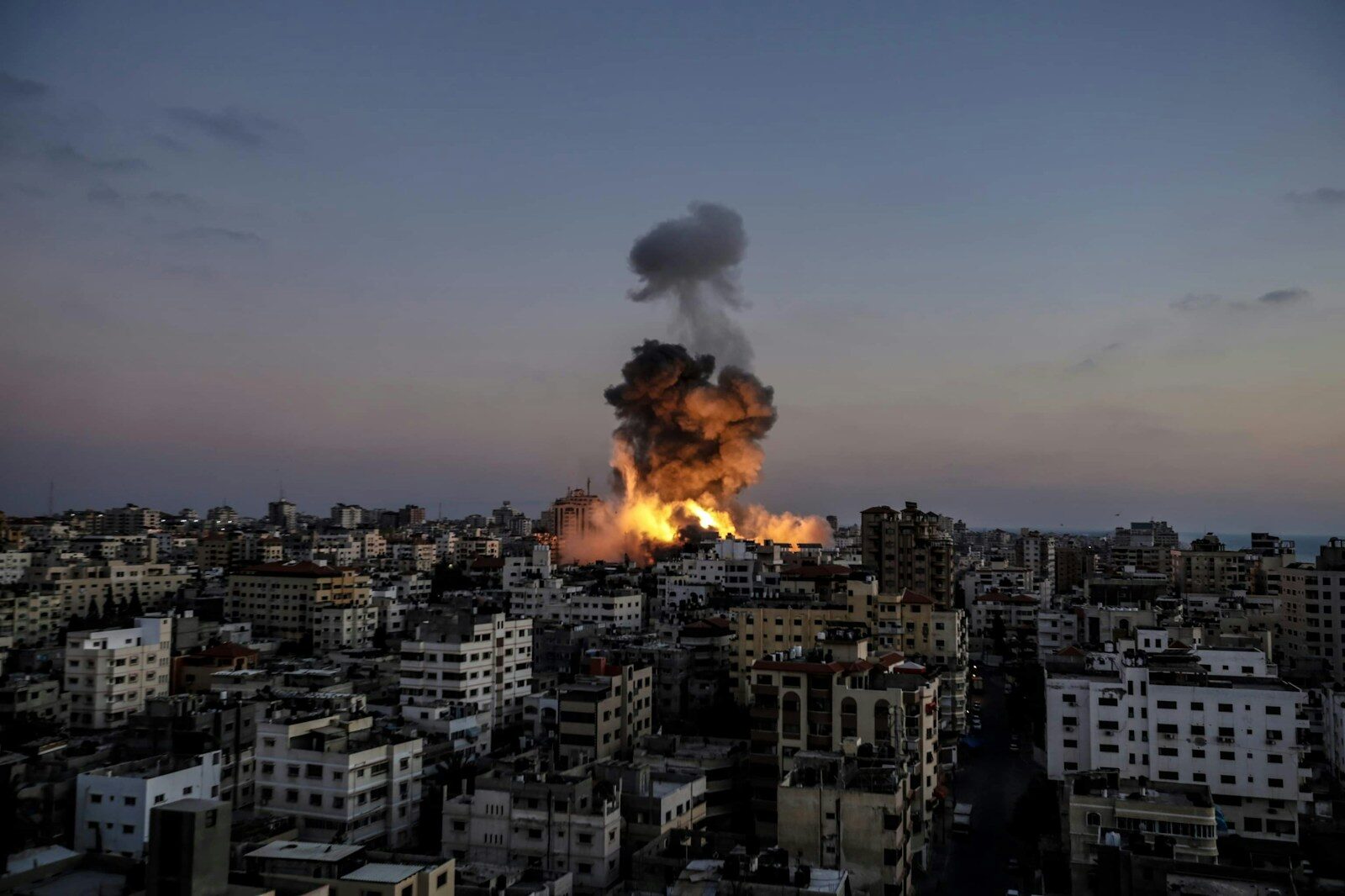
The fragile detente that briefly quieted West Asia has suffered a severe rupture. For a second consecutive night, United States military forces have launched concentrated airstrikes against strategic targets inside Iran, severely damaging air defense systems, radar installations, and drone command centers along the southern coast. This rapid kinetic escalation follows a blunt declaration by US President Donald Trump that a months-long truce was officially over, a move triggered by Iranian attacks on commercial shipping vessels in the Strait of Hormuz. As the sound of explosions echoed near the strategic waterway and the vital Bushehr nuclear facility, the global community was left confronting a critical question: is the broader Middle East peace process fundamentally dead, or is this a high-stakes manifestation of coercive diplomacy?
The sudden return to open hostilities has shattered the relative calm established by the Islamabad Memorandum, a memorandum of understanding signed on June 17, 2026, which set a 60-day window to formalize a permanent end to the war. The friction point remains the control of maritime commerce. Despite the diplomatic framework, Tehran has sought to assert sovereign authority over the Strait of Hormuz, demanding that international vessels follow protocols mandated by the regime and eventually pay transit fees. When three commercial ships were fired upon early this week, Washington responded with overwhelming force. US Central Command confirmed that the latest wave of strikes hit roughly 90 military targets, aiming to systematically dismantle the Islamic Revolutionary Guard Corps Navy’s capacity to threaten the chokepoint through which one-fifth of the world’s petroleum passes.
The Strategic Anatomy of the Latest Confrontation
The military calculus of the latest American operations reveals a deliberate intent to erode Iran’s coastal leverage. According to defense officials, all targets were restricted to southern Iran, specifically surrounding the towns of Minab and Sirik, alongside drone command units located on Qeshm Island. By neutralizing these localized capabilities, Washington aims to establish an unassailable maritime umbrella, effectively matching President Trump’s public acknowledgment that the US military has spent the past month quietly escorting commercial vessels through the gulf.
Tehran, however, refused to absorb the blow passively. Operating under the shadow of a national period of mourning, as crowds gathered in Iraq and Iran for the burial of the late Supreme Leader Ayatollah Ali Khamenei, who was killed in the war’s initial phases, the regime launched a sprawling regional counter-offensive. The Revolutionary Guards fired a barrage of ballistic missiles and deployed waves of attack drones targeting American military installations across the region. Defensive sirens sounded in the Jordanian capital of Amman as local air defenses intercepted eight of ten missiles aimed at the Azraq military base. Simultaneously, Iranian state media claimed retaliatory strikes against 18 US deployment sites throughout Kuwait, Bahrain, and Iraq’s Kurdistan region.
Economic Ripples and the Fragility of Global Oil Prices
The immediate casualty of this renewed fighting was the hard-won stability of the global energy markets. For several weeks, the existence of the Islamabad Memorandum had successfully extracted the war premium from commodities trading, pulling crude benchmarks back down into the lower $70 range. That progress evaporated in a matter of hours. Following the announcement that the ceasefire had collapsed, global oil prices experienced an immediate, sharp spike, sending shockwaves through equity markets worldwide.
Strait of Hormuz Status: Declared "completely closed" by IRGC Command
Market Impact: Brent crude surges as maritime insurers spike transit premiums
This sudden market reversal introduces immense complexity for corporate operators, logistics networks, and international supply-chain planners who had just begun adjusting their budgets toward a lower-cost environment. The economic fallout is compounded by the fact that the International Maritime Organization has documented a rising civilian toll at sea. A US strike inadvertently struck the oil tanker MT Settebello in the Gulf of Oman, resulting in the confirmed deaths of three Indian sailors. With commercial corridors increasingly treated as active combat zones, global shipping lanes are fracturing, forcing transport fleets to consider the lengthy, capital-intensive circumnavigation of Africa once again.
A View from Ottawa: The Canadian Foreign Policy Dilemma
From a Canadian perspective, the collapse of the truce presents significant diplomatic and economic hurdles. Global Affairs Canada has maintained an watchful posture, consistently advocating for a rules-based international order and the protection of open maritime transit. However, a prolonged spike in crude benchmarks threatens to undermine domestic monetary policy. Canadian central bankers have been navigating a delicate economic cooling cycle, and a sustained resurgence in energy costs could easily bleed into domestic transportation networks, keeping retail fuel costs high and complicating efforts to stabilize consumer inflation.
Diplomatically, the Canadian government faces the task of balancing its traditional alliances. While Ottawa firmly supports the stabilization of global trade routes and condemns threats against commercial shipping, there is deep-seated anxiety regarding the potential for an unmanaged, region-wide escalation. Canadian defense analysts emphasize that if the conflict draws in neighboring Gulf states, the stability of international aviation, shipping, and security architectures will face a disruption not seen in decades.
Escalation as a Prelude to Negotiation
Despite the ferocity of the current military exchanges, close observers of the 2025–2026 negotiations point out that the window for diplomacy has not been completely nailed shut. While Iran’s Foreign Ministry declared the American actions a flagrant violation that rendered previous understandings meaningless, neither Washington nor Tehran has formally walked away from the negotiating table.
Peace Process Timeline (2026)
• April 8: Initial two-week ceasefire brokered by Pakistan
• June 17: Signatures placed on the Islamabad Memorandum
• July 7-8: Ceasefire revoked following shipping lane attacks
• July 15-16: Scheduled round of technical talks in Rome
The underlying mechanics suggest that both actors are engaging in a dangerous game of military brinkmanship, utilizing localized violence not to trigger a total war, but to maximize their leverage ahead of the upcoming diplomatic rounds scheduled in Rome. President Trump explicitly signaled this dual-track approach, warning that while the US would hit Iran hard for maritime disruptions, he anticipated the current flare-up to conclude rapidly, leaving the door wide open for a grand bargain.
The Horizon of Coercive Diplomacy
The events of the past forty-eight hours serve as a stark reminder that the path to a permanent settlement between Washington and Tehran remains incredibly treacherous. The structural grievances, including the future of Iran’s nuclear program and the sovereignty of global maritime corridors, cannot be erased by preliminary signatures on a memorandum. As long as both sides view tactical military strikes as an acceptable tool to alter the balance of power on the bargaining table, the stabilization of global oil prices and international security will remain highly volatile. The peace process is not entirely over, but it has entered its most dangerous phase yet, where a single miscalculated strike could easily transform an aggressive negotiating tactic into an uncontrollable regional conflagration.