
An eerie, copper-toned shroud has descended over the Great Lakes basin, serving as a stark reminder of the volatile intersection between climate change and municipal resilience. In July, 2026, residents across southern Ontario awoke to find the sun reduced to a dull orange disc, choked out by a massive plume of particulate matter originating from northwestern forest fires.
For municipal leaders, emergency services, and commercial operators, the current crisis is a public health warning and a complex operational disruptor. With major metropolitan hubs like Toronto and Windsor temporarily recording some of the worst air quality in the world, the current crisis highlights how rapidly environmental hazards can paralyze regional infrastructure, freeze outdoor labor, and strain local economies.
Anatomy of an Atmospheric Crisis: From Boreal Fires to Southern Streets
The degradation of Ontario air quality is directly tied to an explosive surge in wildfire activity in northwestern Ontario and northeastern Minnesota. While the 2026 fire season started relatively slowly compared to the historic, record-shattering destruction of 2023 and 2025, a prolonged spell of dry, hot weather in late June and early July rapidly cured forest fuels. By mid-July, more than 850 wildfires were actively burning across Canada, with roughly 180 concentrated in Ontario alone. On July 13 and 14, several major blazes in the northwest experienced extreme growth, triggering community evacuations and generating monumental quantities of smoke.
This smoke does not remain localized. Driven by powerful northwesterly winds, the atmospheric plume has traveled hundreds of kilometers southeastward. The geography of southern Ontario, nestled between the Great Lakes, often acts as a catchment basin under specific meteorological conditions. When high-pressure systems trap this cooler, denser, smoke-laden air near the surface – a phenomenon known as a temperature inversion – the concentration of fine particulate matter (PM2.5) spikes dramatically.
These PM2.5 particles, which measure less than 2.5 micrometers in diameter, are particularly hazardous because they bypass the body’s natural respiratory filtration systems, penetrating deep into the lungs and entering the bloodstream.
Unpacking the Orange Alert: Extreme Risks in Toronto and Windsor
To communicate these escalating hazards, Environment and Climate Change Canada deployed its newly implemented, tiered, color-coded weather alert system. The province has shifted away from standard heat warnings to active Orange Warnings for Air Quality. Under this framework, an “Orange Alert” signifies that severe weather is actively occurring and is highly likely to cause significant health impacts, infrastructure disruptions, or regional damage.
The impact has been felt most acutely in the province’s key urban and industrial centers:
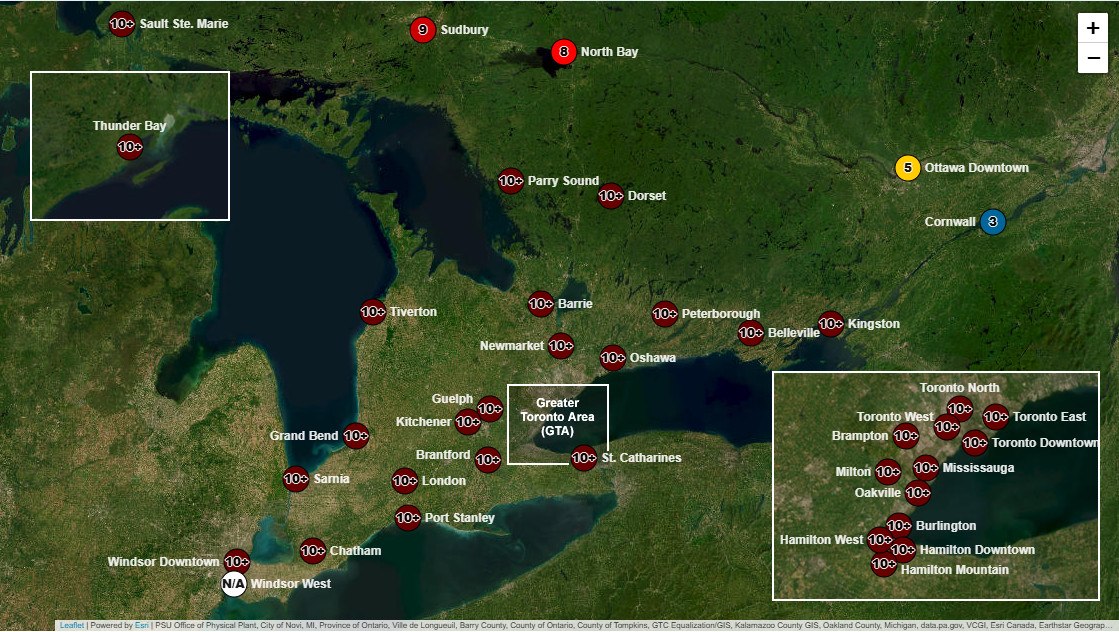
- Toronto: On July 15, 2026, the provincial capital temporarily topped IQAir’s global ranking for the worst air quality among major international cities, outpacing historically polluted megacities. In response, municipal officials closed all outdoor public pools and wading pools, and cancelled all outdoor city-run day camp field trips.
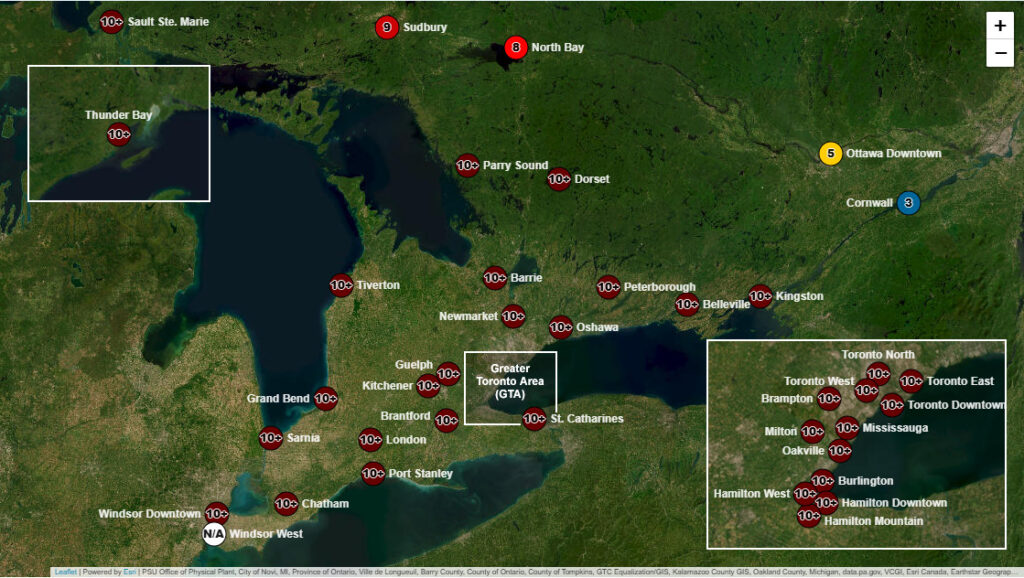
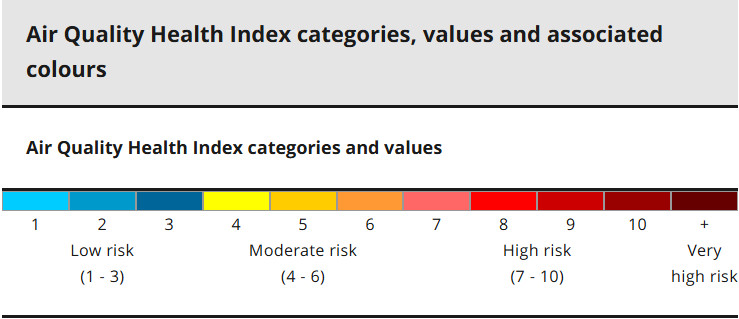
- Windsor: Positioned at the southernmost tip of the province, Windsor-Essex has faced prolonged exposure as the densest portion of the smoke plume drifted further south and west. Windsor’s Air Quality Health Index (AQHI) reached a peak of 10+ (“Very High Risk”), forcing local health units to advise even healthy individuals to curtail outdoor physical exertion.
- The Broader Region: The smoky corridor stretches continuously from Thunder Bay in the north, through Sault Ste. Marie, down to London and the Greater Toronto Area. In London, the poor air quality forced organizers to cancel the opening night of the prominent “Rock the Park” outdoor music festival early, highlighting the immediate financial liabilities facing the entertainment and hospitality sectors.
Operational and Economic Implications for Decision-Makers
For business leaders and public administrators, poor air quality is a compounding operational risk. The immediate impacts stretch far beyond public health advisories, requiring active mitigation across several sectors.
1. Workforce Protection and Labor Disruptions
Under provincial occupational health and safety guidelines, employers are legally obligated to take every reasonable precaution to protect workers. When the AQHI reaches “High” or “Very High” risk levels, outdoor operations, ranging from construction and roofing to municipal maintenance and agricultural harvesting, must be modified.
To mitigate liability and protect staff, operators are increasingly forced to:
- Reschedule strenuous outdoor tasks to early morning hours or shift them indoors where HVAC systems can manage air filtration.
- Provide industrial-grade, well-fitted respirators (such as NIOSH-certified N95 masks) rather than standard dust masks, which do not filter out fine PM2.5 smoke particles.
- Implement strict mandatory rest periods in clean-air, climate-controlled environments.
2. HVAC Infrastructure and Facility Management
For commercial real estate managers, educational institutions, and healthcare facility operators, wildfire smoke places an immense load on mechanical ventilation systems. Standard building filters (typically rated MERV 8 or lower) are insufficient to capture PM2.5.
Facility managers must audit their systems to determine if they can handle MERV 13 or higher-rated filters without damaging fan motors due to increased static pressure. Additionally, during acute outdoor smoke events, operators should temporarily reduce outdoor air intake and transition HVAC systems to “recirculate” mode, utilizing portable HEPA air purifiers in high-occupancy zones to scrub indoor air.
3. Supply Chain and Logistics Bottlenecks
Wildfire smoke significantly reduces ground and air visibility. For logistics providers operating along Ontario’s critical shipping corridors, including Highway 401 and the St. Lawrence Seaway, reduced visibility increases transit times and heightens accident risks. Furthermore, heavy smoke can trigger flight delays or cancellations at major hubs like Toronto Pearson International Airport due to instrument-only landing protocols.
Navigating the Outlook: When Will the Air Clear?
Predicting when Ontario air quality will return to baseline levels is a complex exercise in atmospheric modeling. Weather models indicate that a subtle wind shift from the northwest to the northeast may bring marginal, temporary relief to eastern Ontario, potentially lowering risk levels in Ottawa, Kingston, and Peterborough.
However, for southwestern Ontario the outlook remains highly uncertain. Persistent northwesterly winds are projected to funnel active smoke into the lower Great Lakes region through the weekend.
While meteorologists project a weather system bringing 10 to 20 millimeters of rain to northern Ontario over the coming days, experts caution that this precipitation is unlikely to completely extinguish the deep-seated boreal forest fires driving the crisis. Southern Ontario may experience localized rain and thunderstorms, but atmospheric smoke can actually disrupt cloud dynamics, occasionally reducing the overall intensity of expected rainfall.
Adapting to a New Atmospheric Baseline
The current wildfire smoke blanketing Toronto, Windsor, and the rest of the province is not a temporary anomaly, but rather a preview of the seasonal disruptions that define the modern Canadian summer. As northern forests burn with greater frequency and intensity, the degradation of Ontario air quality will continue to pose a recurring threat to public health, municipal budgets, and commercial productivity.
For forward-looking decision-makers, navigating this reality requires transitioning from reactive crisis management to proactive adaptation. Investing in high efficiency facility filtration, drafting comprehensive outdoor labor safety protocols, and building climate resilience into municipal planning are are foundational strategies for operating in an increasingly volatile world.