
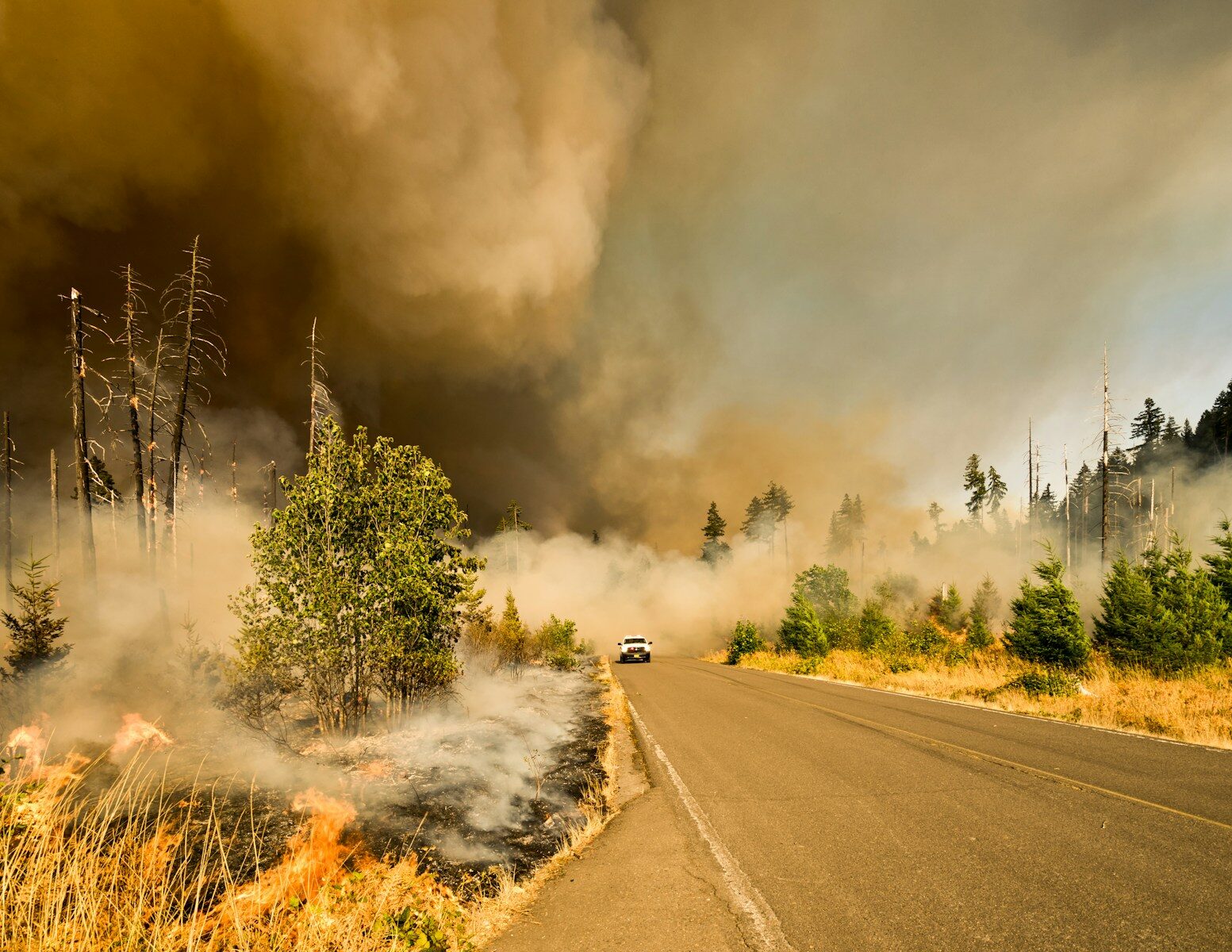
A wildfire near Port Alberni, B.C., has exploded to over 3,400 hectares, blanketing Vancouver Island’s interior with dense, persistent haze. This blaze, part of Canada’s escalating 2025 fire season, is a stark reminder that climate-driven infernos are becoming the new normal—affecting health, community life, and the environment across the country.
Blazing a Path: How It Started and Where It Stands
First detected from the air on June 8, the wildfire erupted in rugged terrain around Nahamint Mountain, approximately 30 km west of Port Alberni, along the slopes south of Sproat Lake. Though early estimates placed the fire at 10 hectares, it rapidly expanded. By mid-June, the fire had surged to over 2,100 hectares, fueled by dry vegetation and strong winds CHEK.
Firefighting crews responded with urgency: 18 ground firefighters, three helicopters, and a response officer were deployed to contain the blaze, with heavy machinery reinforcing perimeter lines.
A Broader Blaze: Canada’s Wildfire Reality in 2025
The Port Alberni blaze isn’t an isolated incident—it’s part of one of Canada’s worst wildfire seasons on record. As of early August, more than 7.3 million hectares have burned across the country, nearly 78% above the recent five-year average The Guardian.
These catastrophic conditions—driven by dry spring weather, record temperatures, and frequent lightning—have been described by scientists as a “new reality” under climate change.
Smoke, Health, and Daily Life Interrupted
Residents in Port Alberni, Lake Cowichan, and nearby provincial parks have been issued air-quality warnings due to thick smoke. Environment Canada urged the public to stay indoors with windows closed and use N95 respirators, prioritizing the health of vulnerable populations like children and seniors Times Colonist.
Locals report reduced visibility, a haunting orange-tinted sky, and a lingering taste of smog—an uneasy blend of fear and resignation.
Who’s Feeling the Heat?
- First Responders: Fire and emergency services are stretched thin across Vancouver Island and beyond.
- Nearby Communities: Increased respiratory illness is a concern among residents, affecting schools, workplaces, and outdoor activities.
- Tourism-Dependent Towns: Port Alberni and Salt Spring Island are experiencing disruptions—Salt Spring even staged evacuation exercises (“Smoke Show”) to stay ready for worst-case scenarios saltspringexchange.com.
- Public Services: Infrastructure like highways and utilities remain under threat, while healthcare systems brace for smoke-related health emergencies.
What Lies Ahead?
Weather & Fire Behavior
The season is far from over. Forecasts for prolonged warmer, drier weather threaten to revive existing hotspots or ignite new ones.
Support and Response
Provincial and local governments, bolstered by emergency resources, continue aggressive containment strategies. Agencies are also exploring long-term resilience plans—like retrofitting public buildings to act as smoke shelters.
Public Awareness
Routine drills and public education campaigns are more critical than ever—empowering communities to respond effectively to evolving wildfire scenarios.
Final Thought
The wildfire near Port Alberni is more than a local emergency—it’s a symbol of Canada’s changing landscape under climate stress. As smoke veils our cities and firefighting resources strain, one thing is clear: building collective resilience isn’t optional—it’s essential to safeguarding public health, infrastructure, and our way of life.
Related news on Canada’s wildfire crisis

Canada wildfire season already second worst on record as experts warn of ‘new reality’