News that survivors of a U.S. strike on a suspected Venezuelan drug-smuggling boat were deliberately killed in a second strike, outrage spread across the globe – and with it came renewed scrutiny of the entire U.S. “drug boat war.” What began as a controversial tactic to stem narcotics flow to America now faces sweeping questions from legal experts, human-rights advocates, lawmakers, and foreign governments.
The “double-tap” boat strike that ignited outrage
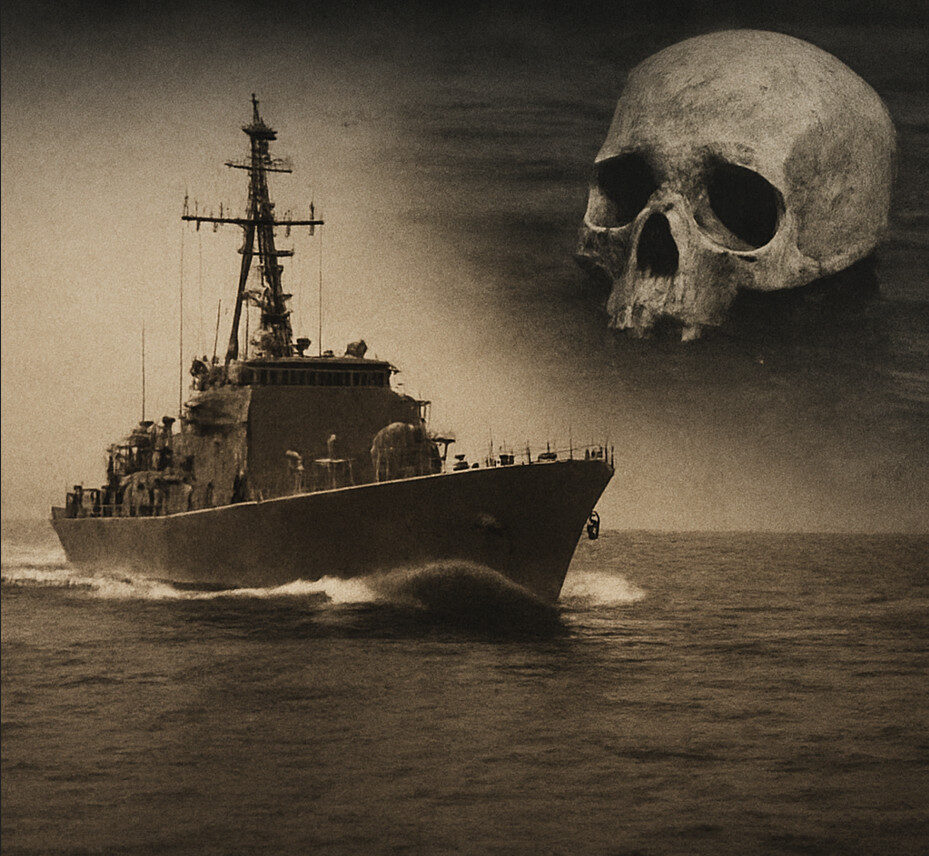
On September 2, 2025, U.S. military forces struck a vessel in the Caribbean Sea suspected of trafficking illegal drugs from Venezuela. The attack killed 11 people aboard. But the controversy erupted when surveillance footage – reported by The Washington Post – showed two survivors clinging to wreckage after the initial strike. According to multiple sources, a second missile strike was then ordered to “kill everybody,” reportedly under orders from U.S. Defense Secretary Pete Hegseth. The Washington Post
The idea: eliminate any chance the vessel – or its occupants – could continue a drug run. But to many legal scholars and human-rights organizations, this second strike was not just reckless — it was unlawful. Human Rights Watch
The result: a firestorm of condemnation — and a full-blown debate over whether the United States has effectively declared war, not just on drug trafficking, but on basic principles of international law.
Why many experts say the strikes break the law
International law – and basic humanity – on the line
Under the long-established laws of armed conflict, individuals who are wounded, shipwrecked, or otherwise incapacitated — collectively known as hors de combat — are protected. They are not lawful targets. The Guardian
Even if the U.S. treats traffickers as combatants, the second strike seems to have violated that principle. As legal scholar Michael Schmitt put it: “You can only use lethal force if there is an imminent threat.” The unarmed survivors posed none.
That’s not all. Domestic U.S. military law — encapsulated in the Uniform Code of Military Justice (UCMJ) — forbids unlawful orders and holds individuals accountable even if they claim to be “just following orders.” The principle dates back to the post-World War II trials and is embedded in the laws of armed conflict.
But what about the U.S. government’s justification?
The administration argues the strikes are part of an “armed conflict” with so-called “narco-terrorists” -cartels and criminal groups tied to Nicolás Maduro regime in Venezuela. This framing attempts to put the boat strikes on the same legal footing as traditional warfare.
However, legal analysts challenge that rationale: drug trafficking – even international – does not amount to an “armed attack” under customary international law, nor does it automatically transform smuggling vessels into lawful military targets. Al Jazeera
In short: the legal foundation is deeply shaky. Many argue the operations fall under peacetime criminal law, where summary execution without due process is clearly prohibited.
Why this campaign even began – and why it matters
Since early September 2025, the U.S. has carried out more than 20 strikes on suspected drug-smuggling vessels in the Caribbean and eastern Pacific, resulting in at least 80–81 deaths.
The aggressive campaign stems from increasing concern in Washington over the importation of illicit narcotics — particularly fentanyl and cocaine — and a desire to disrupt supply before it reaches U.S. shores. By labeling certain organizations “narco-terrorists,” the administration sought to give itself broader license to use military force.
Behind the scenes, U.S. policymakers are also betting this campaign will pressure the Venezuelan government by targeting groups allegedly tied to the regime, potentially weakening its criminal-financial networks.
But the unilateral maritime strikes risk far more than just hitting alleged smugglers: they disturb a delicate balance of international norms, complicate regional relations in the Caribbean and Latin America, and raise serious moral and legal questions for the United States.
Who is Affected?
- Survivors and alleged traffickers — or simply people aboard small vessels — many of whom may have been civilians or fishermen, now risk lethal force without evidence, trial, or due process. Families are already pursuing legal action: one Colombian family formally filed a complaint against the U.S. after relatives were killed.
- U.S. military personnel — who may face prosecution under the UCMJ for carrying out or refusing unlawful orders. Experts warn that orders to fire on incapacitated survivors are plainly illegal.
- International law and human-rights frameworks — institutions meant to safeguard human life and maritime conduct are under severe strain. The campaign sets a dangerous precedent: criminal suspects treated as enemy combatants, with no transparency or accountability.
- U.S.–Latin America relations — several regional governments and international bodies (including Human Rights Watch and the United Nations Office of the High Commissioner for Human Rights) have condemned the strikes and called for investigations. Such actions erode trust and fuel accusations of U.S. overreach.
- Global norms around use of force — the campaign blurs distinctions between crime-fighting and warfare. If left unchecked, it could open the door to more extrajudicial killings elsewhere under the pretext of counter-drug or counter-terror operations.
Investigations, oversight, and court of public opinion
In response to mounting outrage, both houses of the U.S. Congress — including previously compliant Republican-led armed services committees — have pledged to investigate. Commanders may soon be called to testify, including Frank M. Bradley, the admiral who ordered the second strike.
The campaign’s critics warn that readers should not lose sight of the bigger issue: the entire legal basis for the “drug boat war” is deeply shaky. The second strike may only be the most glaring example — but many more may already amount to extrajudicial killings.
International pressure — from foreign governments, regional organizations, and human-rights bodies — may intensify. Already, the U.N. has publicly decried the strikes as “unacceptable” and demanded the U.S. halt them.
Ultimately, the coming weeks may determine whether these operations become a normalized feature of U.S. foreign policy — or a cautionary example of what happens when fear and expedience override law and accountability.
Takeaways
- The killings of survivors on the boat strike went beyond a controversial tactical decision — they potentially violated recognized international law and U.S. military law.
- Labeling drug traffickers as “terrorists” does not automatically create a lawful war; many experts argue there is no legitimate armed conflict with drug cartels.
- U.S. service members who followed orders to “kill everyone” may face legal liability — “just following orders” is not a defense under the Uniform Code of Military Justice or international law.
- The campaign endangers long-standing norms around maritime safety, due process, and human rights — setting a potentially dangerous global precedent.
- Public and Congressional scrutiny are increasing rapidly. What happens now — investigations, legal challenges, international reactions — could reshape how the U.S. uses force abroad for years to come.