Ceasefire or Ceasefire in Name Only?
The US-Iran ceasefire deal announced on April 8, 2026 is, depending on who you ask, a historic victory for diplomacy, a humiliating climbdown for the United States, a triumph for Iran’s resistance, a cynical pause before the next escalation, or simply a mess. The truth may contain all of these things simultaneously. What is not in dispute is that the agreement, brokered through frantic last-minute Pakistani mediation and announced via a Truth Social post less than two hours before Donald Trump’s own deadline expired, stopped one of the most dangerous military confrontations the Middle East has seen in decades. Whether it holds, and what it actually means for a long-term peace, are questions that will define the region’s trajectory for months to come.
How the World Got Here: Forty Days of War
To understand the significance of the ceasefire, it is necessary to understand the extraordinary circumstances that preceded it. On February 28, 2026, the United States and Israel launched large-scale coordinated strikes against Iran, beginning what became known as the 2026 Iran war. The attacks included the assassination of Iran’s Supreme Leader Ayatollah Ali Khamenei, as well as the assassination of Ali Larijani, a key figure in any potential negotiations. Wikipedia Iran responded with waves of missile and drone strikes against US and Israeli military targets, and the conflict rapidly widened to engulf the broader region.
Over the following weeks, the war pulled in Gulf states, displaced over a million people in Lebanon through intensified Israeli-Hezbollah fighting, and triggered a global energy crisis of a magnitude not seen in living memory. Before the war, the Strait of Hormuz carried roughly 20 million barrels of oil a day, along with about one fifth of global liquefied natural gas. Its recent blockade sent energy prices sharply higher worldwide. Fox News Iran began restricting passage through the strait, which sent oil prices into triple digits and rattled financial markets on every continent.
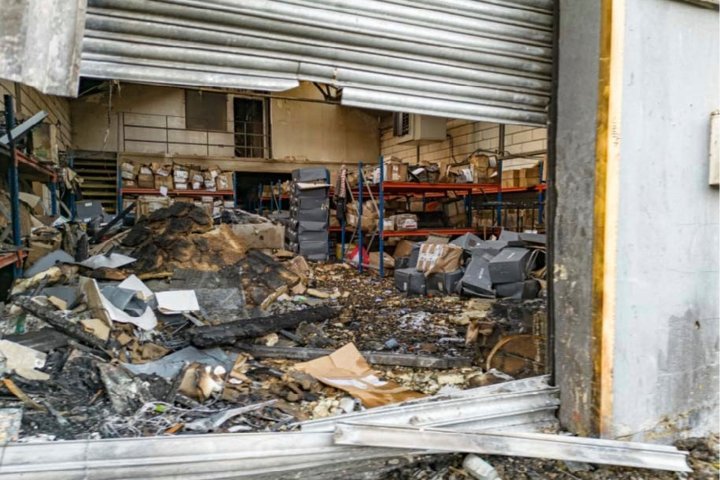
By the time the ceasefire was announced, over 1,500 people had been killed in Lebanon and 23 in Israel. An Iran-based human rights group, HRANA, put the total killed inside Iran at nearly 3,400, including more than 1,600 civilians. Thirteen US service members had also been killed. NBC News The humanitarian cost was devastating, and it was against this backdrop that Pakistan stepped forward as the unlikely architect of a pause.
The Deal That Almost Didn’t Happen: A Timeline of Maximum Pressure
The ceasefire did not emerge from orderly diplomacy. It was extracted through a combination of nuclear-level threats, last-minute back-channel work, and competing public narratives that still have not been fully reconciled.
On April 5, Trump threatened to attack Iran’s power plants and bridges if the Strait of Hormuz was not reopened within two days. On April 6, Pakistan put forward a 45-day ceasefire proposal following indirect talks in Islamabad. Iran rejected it, insisting on a permanent solution rather than a temporary pause. Al Jazeera Iran’s position, driven partly by the memory of Israel’s 12-day war the previous June, was that a short-term truce would simply give the US and Israel time to regroup and strike harder. The previous ceasefire had been followed by this new and larger war.
Then, on the morning of April 7, Trump went further, posting on Truth Social a threat that stopped the world. He warned that Iran’s population would face wide-scale destruction of infrastructure, including bridges, power plants, and water treatment facilities. NPR Legal experts immediately pointed out that deliberately targeting civilian infrastructure without military distinction constitutes a war crime under international law. Members of Congress and human rights organisations condemned the statement. But the threat also concentrated minds.
Less than two hours before Trump’s self-imposed deadline of 8 p.m. Eastern Time on Tuesday, Iran and the United States agreed to the temporary ceasefire. Trump announced it on Truth Social, saying he had agreed to suspend bombing and attacks on Iran for two weeks, and that Pakistan’s prime minister and military chief had requested he hold back. Time The ceasefire was born not in a negotiating room, but in the last few minutes before a deadline that, if missed, might have triggered one of history’s most catastrophic military escalations.
What Is Actually in the US-Iran Ceasefire Deal – and What Isn’t
This is where the story becomes genuinely difficult to parse, because the answer depends on which government you ask and, in Iran’s case, which version of its own documents you consult.
Trump’s announcement was brief and conditions-based. He agreed to suspend attacks on Iran for two weeks, subject to Iran’s commitment to reopen the Strait of Hormuz. He wrote that Iran had proposed “a workable” 10-point peace plan that includes what he described as “points of past contention” that “have been agreed to between the United States and Iran.” NPR He added that the extra two weeks would allow a final agreement to be drawn up and completed.
Iran’s Supreme National Security Council issued its own statement, framing the deal in dramatically different terms. It said that “nearly all the objectives of the war have been achieved” and that the “criminal US” had agreed to the “general framework” of Iran’s 10-point proposal. NPR
So what is actually in Iran’s 10-point plan? According to Iranian state media, the plan demands a US commitment to non-aggression toward Iran, continued Iranian control over the Strait of Hormuz, US acceptance of Iran’s right to enrich uranium, the lifting of all primary and secondary sanctions against Iran, an end to all UN Security Council and IAEA resolutions against the country, compensation for all war damages, the withdrawal of all US combat forces from the region, and a halt to all combat in Lebanon and elsewhere. The Jerusalem Post
Read carefully, this is an extraordinarily ambitious list. It is arguably more ambitious than anything Iran has sought in decades of diplomacy. And yet Trump called it “workable.” The contradiction was almost immediately apparent. White House press secretary Karoline Leavitt told reporters on Wednesday that the initial 10-point plan proposed by Iran was “fundamentally unserious, unacceptable and completely discarded” by the administration, suggesting that Iran had since put forward a modified version that the US found more palatable. The Hill Leavitt also said the president’s red lines “have not changed” and that “the end of enrichment in Iran” remained a firm condition.
The nuclear question is the most explosive single point of disagreement. Trump said on Wednesday that there would be “no enrichment of uranium” and that the US would “dig up and remove all of the deeply buried nuclear dust.” Iran’s parliament speaker said the same day that one of the ceasefire points had already been violated, specifically the US position on enrichment. Iran’s nuclear regulator stated publicly that any attempt to limit Iran’s enrichment program would fail. Wikipedia
In other words, within hours of the ceasefire taking effect, the two sides were already publicly contradicting each other on what they had agreed to.
The Strait of Hormuz: Not Quite Open
The practical anchor of the entire agreement is the Strait of Hormuz, and here too the situation is murkier than official statements suggest. Trump’s ceasefire announcement explicitly conditioned the truce on the “complete, immediate, and safe opening” of the strait. Iran’s foreign minister, for his part, said passage would resume “via coordination with Iran’s Armed Forces and with due consideration of technical limitations,” without specifying what those limitations meant.
Despite the agreement, the strait remained effectively closed in practical terms, with Iran limiting the number of ships that could cross and charging tolls of over one million dollars per ship. Only four ships carrying dry cargo, and therefore not oil or gas tankers, managed to pass through on the first day of the truce. Wikipedia When Israeli strikes on Lebanon resumed on Wednesday, Iran halted even that limited passage, with an Iranian news agency reporting that oil traffic through the strait had been suspended again. The White House called this “completely unacceptable.” Vice President JD Vance, speaking in Hungary, warned that if Iran did not follow through on opening the strait, the ceasefire would end.
The economic impact of all this uncertainty was, however, immediately felt in markets. The Dow Jones Industrial Average soared 1,325 points, or 2.8 percent, to close at 47,909 on Wednesday, while the S&P 500 leaped 2.5 percent and the Nasdaq rallied 2.8 percent. Oil prices dropped below 95 dollars per barrel in response to the de-escalation. Fox News Markets were clearly pricing in the prospect of the strait reopening. Whether the physical reality of oil tankers moving through freely will match that optimism in the days ahead remains to be seen.
The Lebanon Problem: The Wild Card That Could Break Everything
If nuclear enrichment is the philosophical fault line in these negotiations, Lebanon is the operational landmine sitting directly under the agreement’s foundations.
Pakistan’s prime minister Shehbaz Sharif, in announcing the ceasefire, said it would apply to “Lebanon and elsewhere.” Iran’s 10-point plan explicitly includes a halt to fighting in Lebanon as a core condition. Iran’s president said ending hostilities there was central to any deal Iran could sustain.
And then Israel said no. Israeli Prime Minister Benjamin Netanyahu said his government supported Trump’s decision to suspend strikes against Iran for two weeks, but that the ceasefire would not extend to Lebanon, contradicting mediator Pakistan’s claims directly. NPR Israeli strikes in Lebanon continued on Wednesday, including a new forced evacuation order for a building near the southern city of Tyre.
Iran expert Trita Parsi said the potential talks in Islamabad could fail, but noted that “the terrain has shifted.” He also described Lebanon as a “major test” for the United States, saying it would be “very difficult for the Iranians to agree to a ceasefire on their own for themselves while leaving Lebanon exposed.” Al Jazeera King’s College analyst Andreas Krieg was blunter, saying that “the greatest threat to any ceasefire in the region remains Israel,” noting that Israel prefers ambiguous ceasefire deals that allow it to continue operating.
Iran’s parliament speaker invoked the Lebanon strikes as one of three violations of the ceasefire on its very first day, alongside a drone entering Iranian airspace and the US refusal to accept enrichment. Hezbollah, meanwhile, said its ongoing attacks were a direct response to Israel’s killing of Iran’s supreme leader on the first day of the war. Lebanese health authorities reported hundreds killed or wounded in fresh Israeli strikes on Wednesday alone. NBC News
Who Won? Competing Victory Laps
Both sides have loudly claimed victory, which is either a sign of diplomatic skill or a sign that neither party is being honest with its own population.
Trump declared it a “total and complete victory” in an AFP interview. His argument is straightforward: US and Israeli strikes damaged Iranian infrastructure and military capabilities significantly, Iran ultimately agreed to pause and negotiate, and the strait, at least notionally, is set to reopen. Defense Secretary Pete Hegseth said Trump “chose mercy” with the ceasefire, framing the agreement as an act of magnanimity by a president who could have continued. Fox News
Iran’s Supreme National Security Council, as already noted, said “nearly all the objectives of the war have been achieved.” The Iranian public celebrated in Tehran’s Enqelab Square. Tehran’s argument is that it withstood 40 days of US and Israeli bombardment, kept its nuclear program intact, maintained its position on the Strait of Hormuz, and forced the world’s most powerful military to sit down and negotiate on the basis of Iran’s own 10-point framework, a framework that includes Iranian sovereignty over Hormuz, nuclear enrichment rights, and US troop withdrawal from the region.
The honest answer is that neither side has won in any conclusive sense. What has happened is that a catastrophic military escalation has been temporarily halted, and the harder work of building a durable settlement is only just beginning. Both governments are selling domestically incompatible versions of what they agreed to, and those contradictions will surface very quickly when negotiations open in Islamabad on Friday.
Significant sacrifices are implicit in any real deal. For the US, accepting any enrichment, even at civilian levels, would be a reversal of Trump’s stated red line and a departure from decades of American policy. For Iran, surrendering meaningful control of Hormuz, abandoning proxy forces in Lebanon and Iraq, or submitting to intrusive nuclear inspections would represent extraordinary concessions for a government that just survived a war and is telling its citizens it prevailed.
Pakistan’s Unlikely Moment on the World Stage
One underreported dimension of this story is the role of Pakistan as mediator. Pakistani Prime Minister Shehbaz Sharif announced the ceasefire with evident pride, saying “both parties have displayed remarkable wisdom and understanding” and inviting delegations to Islamabad on Friday, April 10. Al Jazeera Pakistan’s military chief, Field Marshal Asim Munir, was named by Trump in his ceasefire announcement as a key interlocutor.
Pakistan occupies an unusual position here. It has a long history of complex relationships with both the United States (as an aid recipient, security partner, and occasional friction point) and with Iran (as a Sunni-majority neighbor with a significant Shia population and shared border). Its willingness to serve as the conduit for perhaps the most consequential diplomatic messages of the decade is both a risk and an opportunity for Islamabad. If negotiations in Islamabad produce a lasting framework, Pakistan’s standing in the international community would be transformed.
How Fragile Is This? The Risks Going Forward
To call this ceasefire fragile would be generous. It is better described as extremely contingent, resting on multiple conditions that were already being contested within hours of the announcement.
The Israeli factor is perhaps the most unpredictable. Netanyahu has made clear that Lebanon is not included in his understanding of the deal, and his domestic political survival depends in significant part on appearing strong against Hezbollah. Israel has its own intelligence interests, its own timelines, and its own red lines around Iranian proxies that do not automatically align with Washington’s diplomatic agenda. A single Israeli strike on Iranian territory, or a Hezbollah attack significant enough to trigger an Israeli response that spills back into Iran, could collapse the entire structure.
The nuclear enrichment dispute is a structural problem with no easy resolution. The US position has been publicly stated as a hard red line. Iran’s position, also publicly stated, treats enrichment as a sovereign right it will not surrender. These cannot both be satisfied in a final agreement. Someone will have to move, and neither government has any obvious political space to do so without significant domestic cost.
Iran’s parliament speaker claimed on Wednesday that three provisions of its own 10-point plan had already been violated since the ceasefire began, specifically continued Israeli attacks on Lebanon, a drone entering Iranian airspace, and the US position on enrichment. Wikipedia Each of these is potentially a casus belli for Iran to declare the ceasefire void and resume hostilities. According to Pakistani sources, Iran came close to retaliating against Israeli violations in Lebanon on the night of April 8 to 9. The Islamabad talks on Friday will need to immediately address the Lebanon question or risk the entire framework collapsing before formal negotiations have even begun.
The Strait of Hormuz’s operational reality also remains a flashpoint. Reports emerged on Wednesday that Iran was demanding one dollar per barrel of oil passing through the strait Time, effectively treating the waterway as a revenue source rather than a freely navigable international passage. The US view is categorically opposed to any Iranian fee or control mechanism. The Iranian view treats control over Hormuz as a foundational element of the 10-point framework it says the US has accepted. Resolving this in 14 days, while simultaneously addressing nuclear questions, Lebanon, sanctions, and troop withdrawal, is an extraordinarily ambitious timeline.
The Iran US Ceasefire Deal and What Comes Next
The Iran US ceasefire deal that emerged in the early hours of April 8, 2026 is best understood not as an agreement but as an argument about what an agreement might eventually look like. Two governments, both claiming victory, both speaking to domestic audiences with sharply different expectations, have bought themselves a fortnight to find out whether the gulf between their positions is bridgeable. It is not yet clear that it is.
What is clear is that the 40 days of war have permanently altered the regional landscape. Iran’s supreme leader is dead. Iran’s nuclear facilities have been significantly damaged. Gulf states have absorbed Iranian drone strikes and experienced, perhaps for the first time in memory, the existential vulnerability that comes from being in the crossfire of great power conflict. Lebanon is, again, in ruins.
The Islamabad talks beginning Friday are the next critical test. If Vance, Witkoff, and Iranian officials can narrow the gap on enrichment and Lebanon in the first session, there is a realistic path toward a more durable framework. If they cannot, or if Israeli strikes in Lebanon trigger Iranian retaliation before the talks even conclude, the two-week window will expire without agreement, and the world will face the same terrible choices it faced on the night of April 7 all over again, potentially with less leverage on both sides and even higher public exhaustion with the consequences.
The ceasefire is real, in that guns are largely quiet across Iran’s territory today. Whether it represents anything more than a pause, and whether the peace that both sides claim to want is achievable on terms either government can actually accept, is a question that remains very much open, and the answer will have consequences reaching far beyond the Middle East.