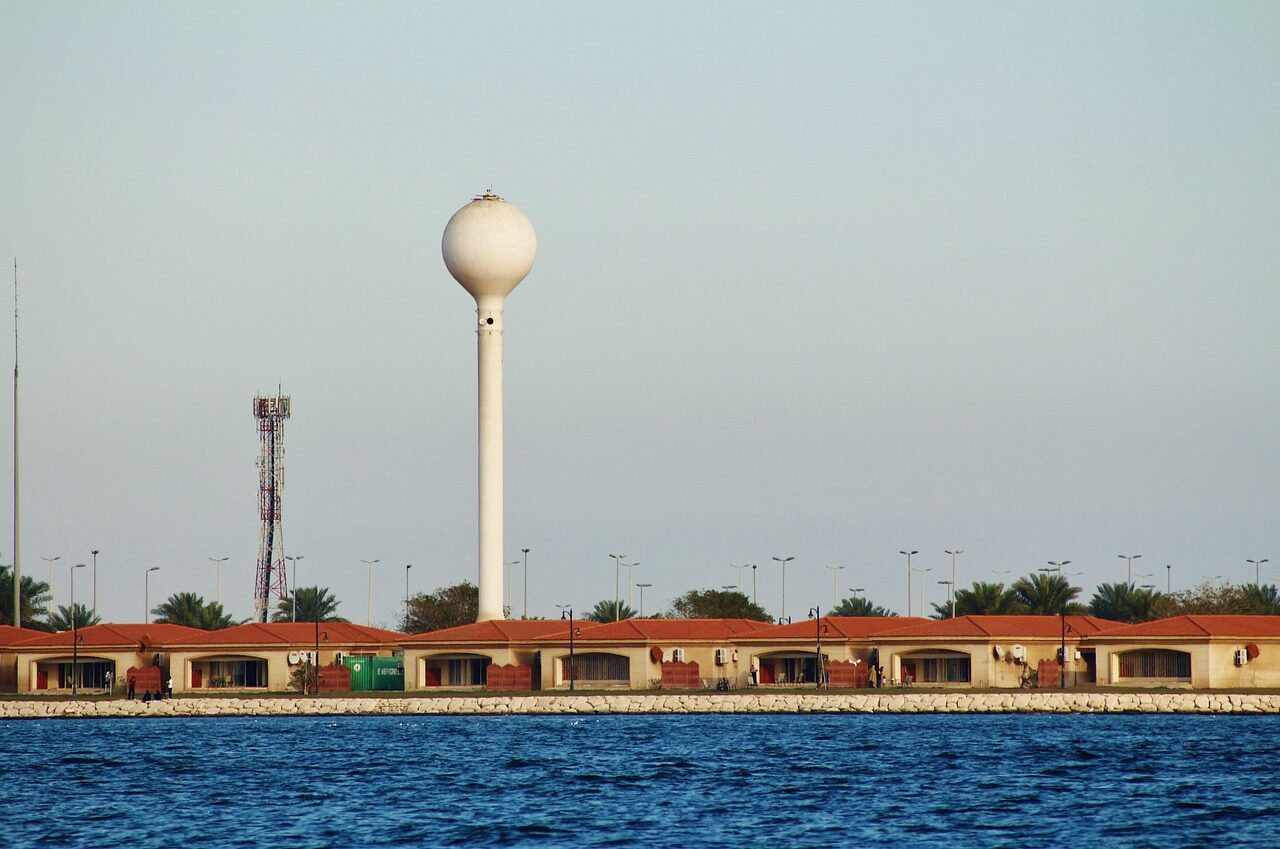
The geopolitical landscape has forced an unexpected and pragmatic pivot in Ottawa’s foreign policy architecture. Fresh from a contentious NATO summit in Ankara, Canadian Prime Minister Mark Carney has landed in Jeddah, Saudi Arabia, for a high-stakes bilateral meeting with Crown Prince Mohammed bin Salman. This historic visit, the first by a Canadian head of government to the kingdom in 26 years, signals a calculated effort by the Carney administration to diversify its trade dependencies. As U.S. President Donald Trump intensifies pressure on the United States-Mexico-Canada Agreement (USMCA) and levies sweeping tariff penalties against historic allies, Canada is aggressively moving to safeguard its macroeconomic security by looking east.
The commercial centerpiece of the diplomatic mission crystallized at the Saudi Arabia-Canada Investment Forum, where corporate delegates finalized 13 bilateral agreements and memoranda of understanding valued at roughly $1 billion. This rapid institutional rapprochement marks the definitive end of the deep diplomatic freeze of 2018, which saw the mutual expulsion of ambassadors over public human rights disputes. For corporate operators, pension fund managers, and supply chain strategists, Carney’s presence in Jeddah confirms that Canada has officially embraced a doctrine of economic realism, prioritizing market access, long-term capital preservation, and infrastructure collaboration over the idealism that previously restricted cross-border commercial engagement.
The Strategic Blueprint: Vision 2030 Meets Canadian Technology
At the core of the newly forged Canada-Saudi Arabia economic ties lies a deliberate alignment of mutual needs. Saudi Arabia, under the Crown Prince’s ambitious Vision 2030 framework, is systematically attempting to pivot its state revenues away from a pure reliance on crude hydrocarbon extraction. This requires massive, long-term injections of patient international capital, technical engineering expertise, and advanced technological architecture to build out its mining, digital, and civil infrastructure sectors.
Plaintext
Trade Reset Value: ~ $1 Billion USD in signed corporate agreements
Key Institutional Framework: Establishment of the Canada-Saudi Arabia Coordination Council
Canada, conversely, boasts a saturated domestic infrastructure market but possesses world-class expertise in complex engineering, project management, and automated systems. Prominent Canadian engineering giants, including Hatch and AtkinsRéalis, secured significant development commitments during the forum. Furthermore, the Royal Commission for Riyadh City executed two primary infrastructure contracts valued at $440 million. By positioning Canadian service firms as foundational partners in the kingdom’s urban expansion, Ottawa is establishing a reliable revenue pipeline insulated from North American border frictions.
Deepening Institutional Alliances: AI, Mining, and Critical Minerals
The technical scope of the bilateral agreements extends far beyond conventional construction services. The Carney administration travels with a heavy-hitting executive cohort, including Finance Minister François-Philippe Champagne and Defence Investment Agency CEO Doug Guzman. Their explicit objective is to build an institutional highway between Canadian tech hubs and the massive financial reserves of the Saudi Public Investment Fund (PIF).
Leveraging Canada-Saudi Arabia Economic Ties in Emerging Tech
To formalize these technical ambitions, the two nations signed two binding memoranda of understanding explicitly targeting joint exploration in artificial intelligence and clean energy. Saudi Arabia’s Investment Minister, Fahad Al-Saif, noted that the kingdom offers long-term, patient capital that matches the lengthy development cycles required for heavy tech infrastructure.
Plaintext
Strategic Sectors Targeted under the 2026 Jeddah Accords:
• Artificial Intelligence: Joint cloud computing architecture and localized algorithmic development
• Critical Minerals: Collaborative ventures to secure supply chains for electric vehicle components
• Defence and Aerospace: Engineering partnerships to support regional logistical modernization
For Canadian AI firms and software developers, this relationship unlocks access to massive, unencumbered computational data centers currently being built out across the Gulf. Concurrently, the collaboration aims to harness Canadian mining and geological expertise to assist Saudi state-owned entities like Ma’aden in mapping and extracting untapped critical mineral deposits across the Arabian Shield, a vital component for global clean-energy supply chains.
Defensive Diversification: Mitigating the American Trade Shock
The timing of Prime Minister Carney’s Middle Eastern itinerary cannot be decoupled from the escalating economic tensions emanating from Washington. With the Trump administration actively weaponizing cross-border tariffs and signaling an aggressive renegotiation of North American trade legalities, reliance on the traditional U.S. export corridor has transformed into a systemic vulnerability for Canadian industry.
A primary priority for Finance Minister Champagne during these talks is resolving structural financial friction points, specifically negotiating clear foreign-investment protection rules and removing double-taxation barriers between Ottawa and Riyadh. A delegation of Canada’s largest institutional pension funds is scheduled to return to the kingdom in the coming months to finalize direct equity placements. By embedding Canadian capital into Saudi diversification projects, and vice versa, Canada is creating a critical buffer against potential domestic contractions caused by a protective North American trade bloc.
Regional Volatility and Maritime Security Imperatives
While the primary driver of the bilateral summit remains financial diversification, the acute military crises currently roiling the region dominated the closed-door security briefings at al-Salam Palace. The meeting occurred amid intense regional friction, punctuated by recent kinetic exchanges and missile strikes that disrupted commercial maritime transit lines along the southern Gulf coast.
Prime Minister Carney issued a formal condemnation of the destabilizing operations targeting commercial corridors, explicitly reinforcing Canada’s commitment to the territorial integrity and maritime sovereignty of regional partners. For logistics decision-makers, this security alignment is critical. Canada’s active backing of defensive maritime normalization frameworks ensures that the corporate supply routes utilized by Canadian firms exporting agricultural, specialized manufacturing, and aerospace components to the Middle East remain shielded by international security umbrellas.
The Era of Pragmatic Statecraft
Mark Carney’s official arrival in Jeddah marks a fundamental realignment of Canadian foreign economic policy. By closing the door on nearly a decade of diplomatic distance, Ottawa has acknowledged that navigating a highly fractured global economy requires absolute structural agility. The expansion of Canada-Saudi Arabia economic ties is not merely a collection of isolated corporate contracts, it represents a calculated sovereign hedge against rising Western protectionism. As global trade walls continue to rise across North America and Europe, the long-term stability of Canada’s resource, engineering, and technology sectors will increasingly depend on its capacity to anchor itself within the high-growth, capital-rich corridors of the global South.