
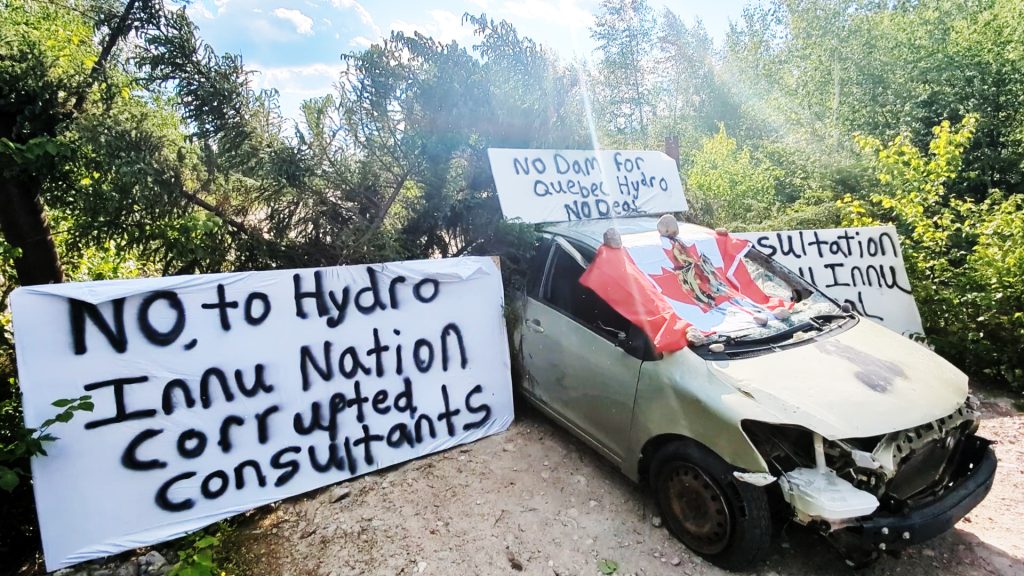
The son of a late Innu leader is speaking out against Hydro-Quebec’s actions on Gull Island, stating that the company does not have the consent of the Innu people and calling for an immediate halt to their work.
In an interview with The Independent, Etienne Rich, son of former Innu Nation Grand Chief Joseph Rich, expressed his concerns about the ongoing construction of a hydroelectric dam on Gull Island, located in the Churchill River in Labrador.
Rich stated that the Innu people have not given their consent for the project, which is a violation of their rights as Indigenous peoples. He also pointed out that the Innu Nation has not been properly consulted or included in the decision-making process.
According to Rich, the Innu people have a deep connection to Gull Island and the surrounding area, as it is a sacred site and an important part of their culture and way of life. He believes that the construction of the dam will have a significant impact on the environment and the Innu people’s traditional activities, such as hunting and fishing.
Rich also expressed his disappointment with the lack of transparency from Hydro-Quebec, stating that the company has not been forthcoming with information about the project and its potential impacts.
He called for an immediate halt to the construction of the dam and urged the government and Hydro-Quebec to engage in meaningful consultation with the Innu Nation to address their concerns and find a mutually beneficial solution.
The Innu Nation has been fighting against the Gull Island project for decades, and Rich’s statements echo the sentiments of many Innu people who are deeply concerned about the potential consequences of the dam.
The Independent reached out to Hydro-Quebec for comment, but the company did not respond by the time of publication.
As the construction of the Gull Island dam continues, it is clear that the Innu people’s voices must be heard and their rights must be respected. The call for a halt to the project by the son of a respected Innu leader is a powerful reminder that Indigenous consent and consultation are crucial in any development on their traditional lands.